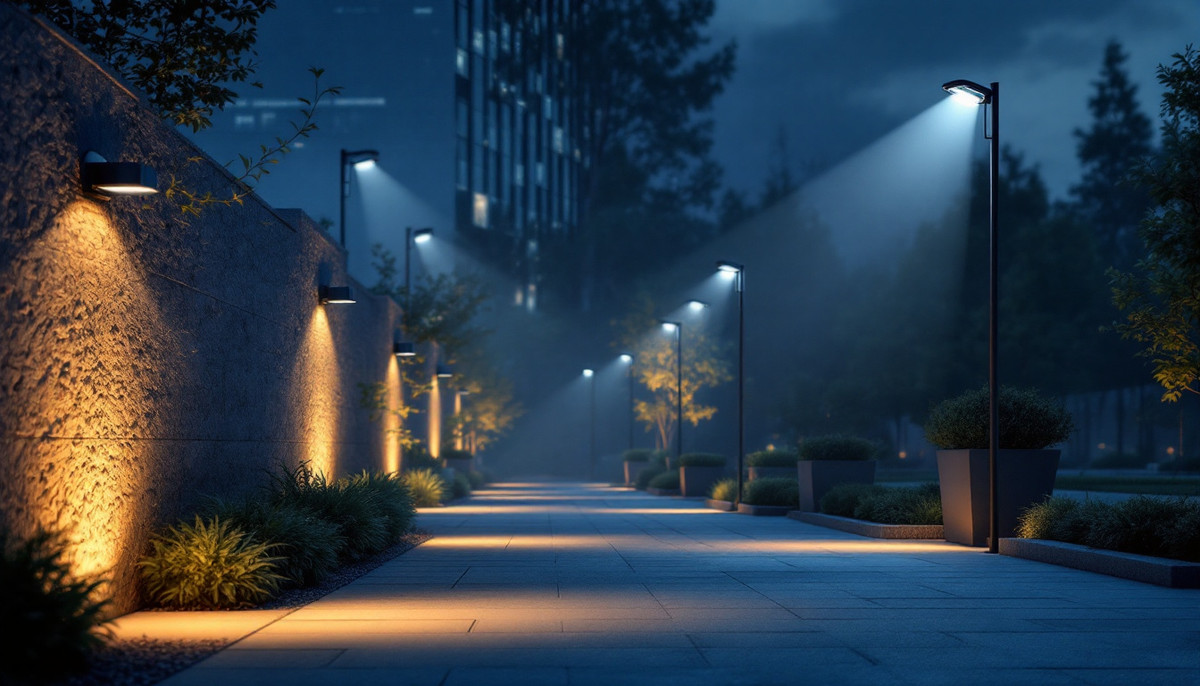
Multi-Tenant residential complexes exist in a variety of types, and each type of complex is configured according to the needs and preferences of its residents. For example, apartment complexes have a higher density of residents living in smaller units, whereas townhouse complexes function more like clusters of single-family homes. Regardless of configuration, multi-tenant residential complexes will require proper security lighting for their occupants.
As apartments, condominiums, and HOA communities continue to expand, outdoor security lighting has become a critical factor in ensuring resident safety and satisfaction. From parking lots and walkways to entry points and recreational spaces, well-placed lighting is essential for deterring crime, preventing accidents, and creating welcoming environments. At the same time, property managers and developers must balance concerns like light trespass, energy efficiency, and long-term durability.
What are the main objectives of security lighting for multi-tenant residential complexes?
- Safety: Residents should be able to navigate walkways, parking areas, and entrances without issues.
- Security: Trespassing, vandalism, and theft should be deterred through strategically placed illumination.
- Aesthetics: Maintain a welcoming atmosphere without creating harsh or intrusive lighting.
- Energy Efficiency: LED fixtures, motion sensors, and smart controls should be utilized to reduce operating costs.
What areas should be prioritized in a security lighting plan for apartments and HOAs?
- Perimeters and fenced areas will require continuous, even lighting to eliminate dark spots.
- Entrances and exits will require bright, glare-free lighting for main doors, side gates, and emergency exits.
- Parking areas and garages will require pole-mounted fixtures and ceiling-mounted lights to provide uniform coverage to avoid dark patches.
- Walkways and stairwells will require low-glare, downward-facing lights for safe navigation.
- Common areas, such as courtyards, mailrooms, and recreational spaces should be well-lit but inviting.
How can property managers reduce light trespass into resident windows?
Light trespass occurs when illumination from light fixtures spills over from their intended target area into homes, apartments, and other residences.
To prevent glare and overspill, adjust light fixtures to direct beams downward, use shielding, and mount fixtures at proper heights.
To avoid light pollution and prevent glare into windows, use full-cutoff light fixtures, light shields, and downward angles.
What role do motion sensors and smart controls play in residential lighting?
Motion sensors activate lights only when motion is detected and then turn them off after a specified period when motion is no longer detected.
Smart controls, such as timers and photocells, allow for zoning and scheduling. Timers are set and adjusted as needed to turn lights on or off at specific times. Photocells automatically turn lights on at night and turn them off during daylight hours.
These features balance security with energy efficiency.
Why are LED fixtures recommended for security lighting?
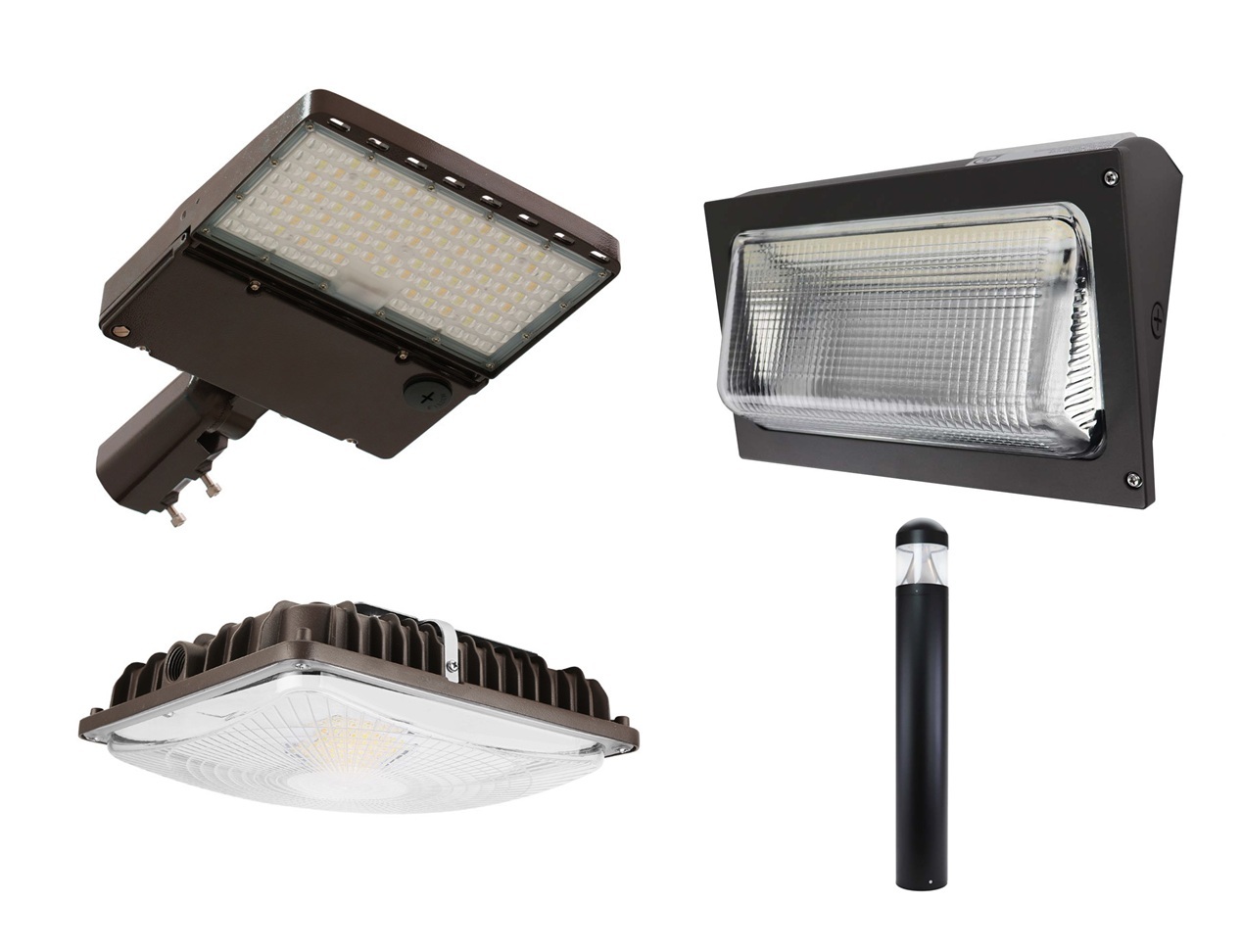
Not only do LED lights provide bright, uniform lighting, but they also offer energy savings, reduced maintenance, and long lifespans compared to standard security lighting. Types of LED security lighting include:
- LED Floodlights are mounted on poles or building exteriors and offer wide light coverage in parking lots and building perimeters.
- Wall Packs are mounted on building exteriors and are ideal for entrances and pathways.
- Bollard lights are installed on the ground and are ideal for pedestrian walkways and landscaped areas.
- Canopy lights are mounted on ceilings and are ideal for parking garages or overhangs.
How can lighting poles integrate with security cameras for added protection?
Security camera poles allow lighting and surveillance to be mounted together, enhancing coverage while simplifying installation. Installing outdoor security cameras for surveillance is greatly enhanced by mounting them on poles. Placing the cameras at a high elevation allows for a broader line of sight and makes them difficult to tamper with. When combined with flood lights, video surveillance is enhanced at night by improving picture clarity.
Why choose LightMart for multi-tenant security lighting solutions?
LightMart’s has expertise in providing durable light poles, camera-ready options, and turnkey packages designed specifically for HOAs, apartments, and condominium properties.
HOA boards, property managers, and developers are invited to contact LightMart for tailored recommendations, product support, and complete security lighting plans. HOA, condo, and apartment lighting solutions from LightMart provide turnkey options that simplify both specification and installation.
David DeWald is the E-Commerce Marketing Specialist at LightMart. He has been working in the industrial and commercial lighting industry since 2013 and is based in the greater Chicago area. David specializes in digital product management, web content writing, and product marketing. He regularly publishes lighting industry-related articles on the LightMart blog. You can visit his LinkedIn profile here.
Security light poles
Apartment security lighting
HOA outdoor lighting
Security lighting for multi-family properties