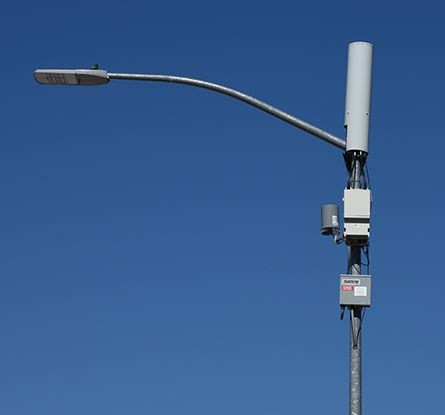
The introduction of new technologies enables the integration of new functions into common structures, such as street light poles. Rather than simply illuminating streets and roadways, we can now incorporate security cameras, WIFI access points, 5G nodes, IOT sensors, and more into light poles that allow them to provide many more useful functions. This integration turns a simple street light pole into a “smart” pole.
Smart street light poles utilize their two main features, a power supply system and their location, to incorporate other functions, including the Internet of Things (IoT), to form a multi-pole system.
As cities and municipalities accelerate smart infrastructure projects, ensuring electrical safety and regulatory compliance in smart pole installations has become increasingly critical. Electricians, contractors, and infrastructure planners need to know how to safely design and install smart poles equipped with LED lighting, 5G antennas, and public WiFi systems.
This article will highlight the National Electrical Code (NEC) standards governing power and data separation, grounding, and overcurrent protection for smart poles. The NEC sets the standard for safe electrical design, installation, and inspection. NEC compliance protects people and property from electrical hazards.
What are smart pole wiring standards, and why do they matter?
Smart pole wiring standards outline proper methods for integrating power, data, and grounding within poles supporting LED lighting, 5G antennas, and public Wi-Fi. Meeting these standards for NEC-compliant poles ensures consistent performance and safety across all connected components.
Which NEC codes apply to smart pole installations?
Smart poles must follow National Electrical Code (NEC) articles addressing grounding, conductor sizing, and the separation of power and data circuits.
Why is grounding and bonding critical for smart pole safety?
Grounded and bonded electrical systems protect people, equipment, and wiring from surges, lightning, and electrical faults. Grounding is accomplished by redirecting unintended electrical energy through the grounding system into the earth and away from critical components. Bonding connects conductive parts within an electrical system to ensure they are at the same potential, preventing shock hazards.
The NEC Article 250 requires the following:
- Establishment of an effective ground-fault current path. This enables overcurrent protection devices to operate by connecting the grounding system to all metal parts that might become energized.
- Bonding of conductive materials to the grounding system. Electrically conductive materials, like structural steel or metal piping, should be bonded to ensure safety.
- Grounding of electrode conductors. Grounding electrode conductors must be connected at accessible points from the load end of service conductors. Specific rules apply to outdoor transformers and dual-fed services.
What are the NEC codes for smart pole conductor sizing?
For smart poles, the conductor sizing process entails determining the load requirements, selecting the appropriate conductor size, and ensuring proper overcurrent protection. NEC requirements state that the conductor should be sized at least 100% of the noncontinuous load, plus 125% of the continuous load. The conductor should also be protected against overcurrent (in agreement with NEC requirements).
Specific requirements for smart poles will vary depending on the type of pole and the load it will support. Consult NEC and local building codes for exact sizing requirements.
How should electricians manage power and data cable separation?
Maintaining physical separation between power and data cables minimizes interference and improves performance. The NEC requires the following:
- A minimum separation of 2 inches between communication circuit raceways and non-communication raceways, enclosures, or cables. It applies to parallel runs, preventing accidental contact and inductive coupling.
- Intersecting power and communications cables should cross perpendicularly at a 90-degree angle with a two-inch separation.
- High-current power circuits should surpass a two-inch minimum separation, ensuring ideal signal integrity. Twelve inches or more in some cases.
What regional standards should contractors verify before installation?
Regional utilities such as PG&E, NBU, or SLC may require specific grounding methods, conduit routing, and inspection procedures. Verifying these requirements early to ensure local compliance and smooth project approval. Consult your local utility provider for more information.
How does weatherproofing protect internal wiring?
Outdoor applications need to account for environmental stresses such as rain, UV exposure, dust, and moisture. It’s critical that internal wiring be protected from the elements so that smart pole components will function reliably.
The pole itself is the best place to start with weatherproofing. Galvanized steel, powder-coated aluminum, or fiberglass poles are corrosion-resistant, ensuring a protective shell around internal components.
From there, the inside of the pole needs to safely house internal wiring by utilizing the following:
- Sealed access panels and threaded closure plugs
- Gasketed junction boxes
- Corrosion-resistant fittings
- Protective sleeving/conduit
These features reduce maintenance requirements and protect infrastructure from environmental damage.
Why choose LightMart for smart pole compliance and safety guidance?
LightMart provides code-ready products, expert technical support, and turnkey smart pole solutions for 5G and Wi-Fi integration. We deliver tailored recommendations that simplify safe, compliant installations.
LightMart’s chambered poles (coming soon!) and multi-purpose poles are engineered to simplify compliant installations, featuring conduit-ready access points and corrosion-resistant materials designed for 5G and WiFi integration.
Contact us today!
David DeWald is the E-Commerce Marketing Specialist at LightMart. He has been working in the industrial and commercial lighting industry since 2013 and is based in the greater Chicago area. David specializes in digital product management, web content writing, and product marketing. He regularly publishes lighting industry-related articles on the LightMart blog. You can visit his LinkedIn profile here.
NEC compliance smart poles
5G smart pole safety
WiFi light pole installation
Light pole wiring for public infrastructure
Light pole installation
Wireless communication
5G base stations